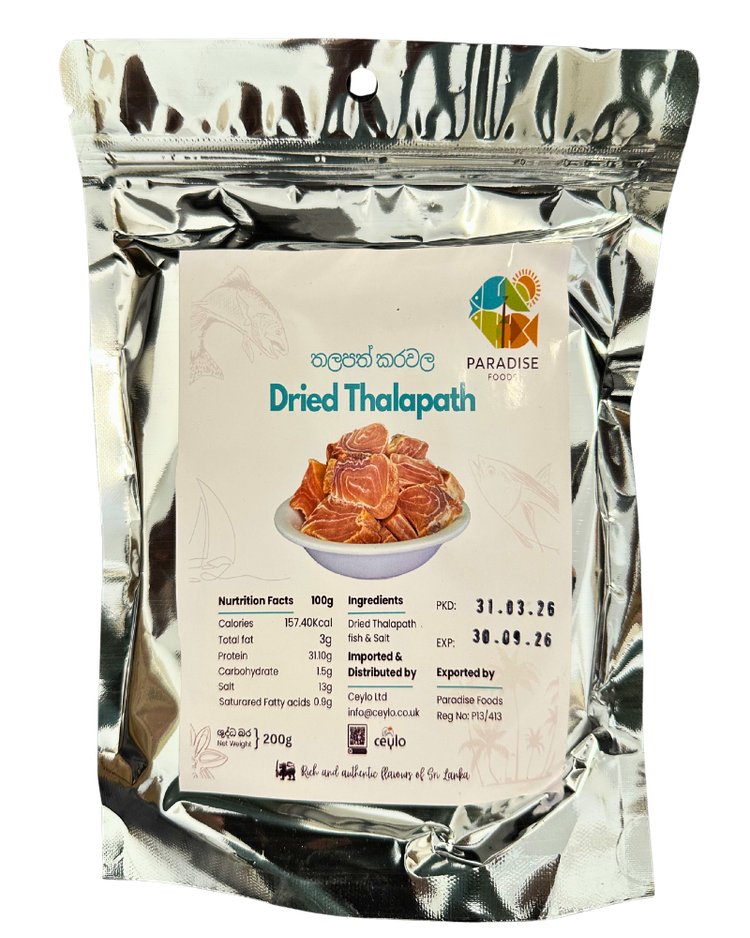
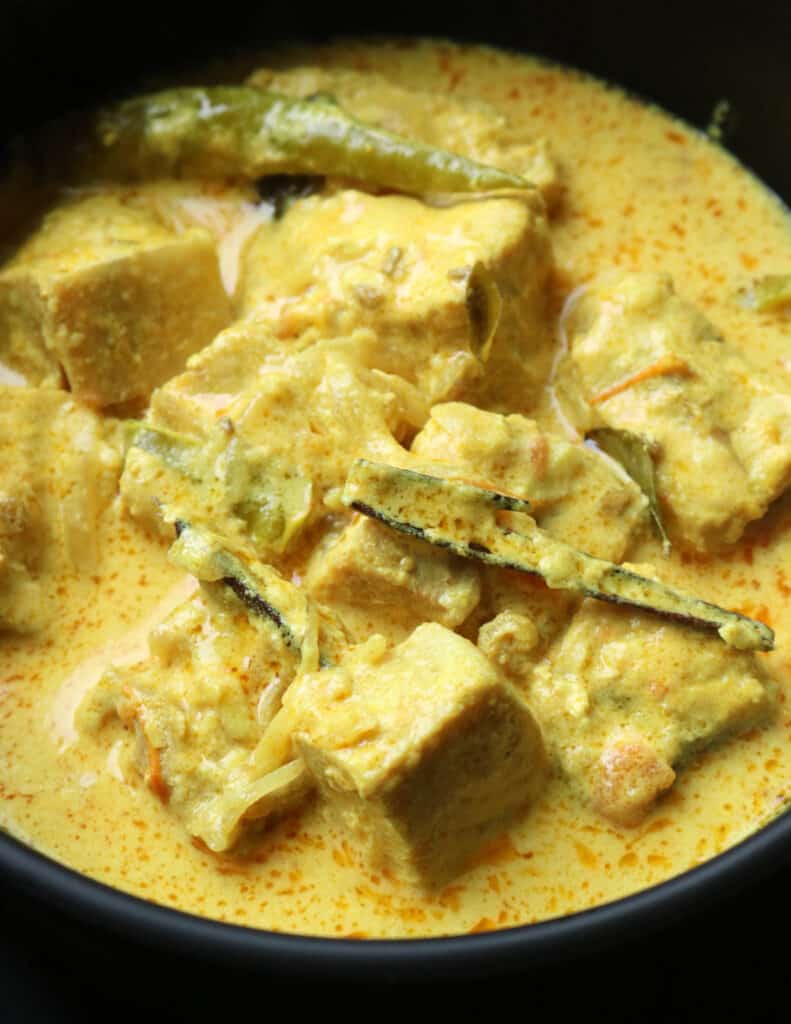
Thalapath Dry Fish Curry (Sri Lankan Dried Sailfish)
A bold, fragrant curry made with dried sailfish — firmer in bite and richer in flavour than tuna, traditionally cooked in clay pots with goraka and roasted curry powder.
Method
- 1
Soak the Thalapath pieces in hot water for 20 minutes. Thalapath is firmer than Kelawalla and needs a touch longer to soften and to lose the surface salt.
- 2
Drain, rinse twice in cold water, and squeeze gently. Set aside.
- 3
Heat the coconut oil in a clay pot or heavy pan over medium heat. Add the mustard seeds. When they pop (about 20 seconds), add the fenugreek, cinnamon, curry leaves and rampe.
- 4
After 10 seconds, add the sliced onion, garlic and ginger. Cook for 6-7 minutes, stirring, until the onion is golden brown. Browning the onion well is what gives this curry its depth.
- 5
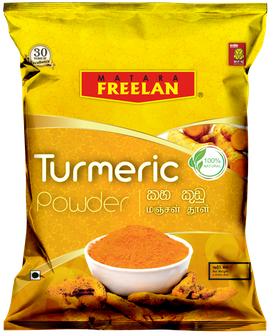
Stir in the turmeric, roasted curry powder and chilli powder. Cook 30 seconds, just to wake the spices.
- 6
Add the drained Thalapath pieces. Turn them in the spiced onion mixture for 2-3 minutes.
- 7
Pour in the water and add the soaked goraka with its soaking liquid. Bring to a simmer, cover loosely, and cook for 10 minutes. The gravy will reduce and turn dark.
- 8
Add the thick coconut milk and the slit green chilli. Stir gently. Simmer (do not boil) for 8-10 minutes until the gravy is glossy and thick enough to coat the back of a spoon.
- 9
Taste and adjust. Usually only a pinch of extra salt is needed; if it is too sharp from the goraka, a quarter-teaspoon of palm sugar (or brown sugar) rounds it off.
- 10
Rest off the heat for 10 minutes before serving. Thalapath curry tastes noticeably better after a short rest as the fish absorbs the gravy.
What is Thalapath?
Thalapath is Sri Lankan sailfish — a large pelagic fish with firm, meaty flesh that lends itself perfectly to drying. The fish is filleted, heavily salted, and sun-dried on coastal racks until it becomes the dense, amber-coloured dry fish that anchors so much of Sri Lankan home cooking.
Thalapath has a stronger, more pronounced flavour than Kelawalla — it can stand up to bold spicing, longer cooking, and the kind of clay-pot curries that taste of the south coast of Sri Lanka. It's also firmer in bite, so the pieces hold their shape through a long simmer rather than falling apart.
Why this curry works
Sri Lankan fish curry built around dry fish has a different character to one made with fresh fish. Where fresh fish gives you a clean, delicate broth, dry fish gives you depth, smokiness and the kind of savouriness you can only get from drawn-out curing. The coconut milk softens it; the goraka cuts through it; the spices warm it.
This is the curry your grandmother made on weeknights — straightforward ingredients, twenty-five minutes on the stove, and a plate of rice afterwards that you remember for days.
The soaking step matters
Don't skip it. Dry fish is heavily salted as part of the curing process — that's how it stays edible without refrigeration. Throwing it straight into the pan gives you a curry no one can eat. A 20-minute hot-water soak rehydrates the flesh, draws out the surface salt, and lets the fish absorb the gravy properly. After soaking, taste a tiny piece — it should still be salty (you want that flavour) but not punishing.
Roasted vs unroasted curry powder
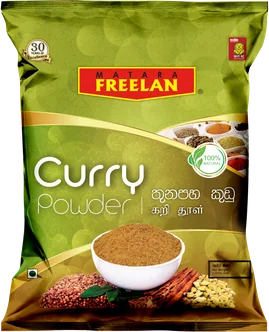
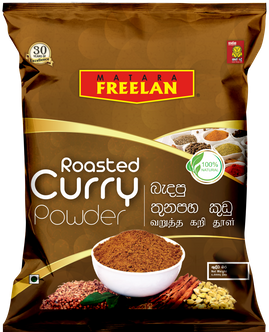
The choice of curry powder matters here. Roasted Sri Lankan curry powder (also called black curry powder) gives a smokier, darker, deeper flavour that pairs beautifully with the assertive taste of Thalapath. Unroasted (raw) curry powder is lighter and brighter, better for fish in fresh form.
For this curry, roasted is the right answer. If you only have unroasted, dry-roast it in a pan for 30 seconds before adding to the curry — it won't be identical but it'll get you closer.
The clay pot tradition
In Sri Lanka, this curry is almost always cooked in a clay pot (mati linda). Clay distributes heat evenly, retains warmth for the long rest, and is said to deepen the flavour over time as the pot seasons. A cast iron pot or heavy-based stainless steel pan is the modern substitute.
If you have a clay pot, season it by rinsing with warm water and rubbing the inside with coconut oil before its first use. After cooking, wash with hot water only — no detergent. Each curry adds a layer of character.
How to serve
Thalapath curry holds its own at the centre of a Sri Lankan rice-and-curry plate. A typical serving would be:
- White rice or basmati. Plain steamed.
- Thalapath curry as the meat / protein.
- A dhal curry for balance.
- A vegetable curry — pumpkin (wattakka), green beans, or okra.
- A mallum or salad of finely shredded cabbage with grated coconut and lime.
- Pol sambol for heat.
- Papadum for crunch.
Thalapath curry also makes an excellent filling for pittu — the layered rice-and-coconut steamed cylinder — with the gravy spooned over for moisture.
Tips for the best result
- Buy good dry fish. The flavour of the dish is 90% the fish. Look for pieces that are firm, dark amber, and smell clean (not sour or off). Our Thalapath is hand-cut and sun-dried on the south coast of Sri Lanka.
- Brown the onion properly. This is the single biggest factor in flavour after the fish itself. Pale onion = pale curry. Take your time.
- Goraka is non-negotiable. It's what differentiates a Sri Lankan fish curry from a generic Indian one. The smoky-sour flavour can't be replicated easily.
- No boiling after coconut milk. Same rule as every other Sri Lankan curry. Low, lazy heat.
- Rest. Ten minutes off the heat before serving, longer if you can. Overnight refrigeration before reheating gives the best result of all.
Variations
- Jaffna-style Thalapath curry. Add roasted Jaffna curry powder instead of Sri Lankan curry powder, plus a tablespoon of grated coconut at the spice stage. The result is darker, drier and more intense.
- With drumstick or jackfruit. Adding chopped drumstick or young jackfruit at step 7 turns this into a heartier one-pot meal.
- Black Thalapath curry. Toast the coriander, cumin and fennel separately until dark before grinding into the curry. The colour goes almost black; the flavour is unforgettable.
- Coconut milk-less version (kalu pol). Skip the coconut milk; finish with toasted grated coconut blended with water. A drier, more concentrated curry — good with pittu.
Storage
Three days refrigerated, three months frozen. Like Kelawalla, this curry tastes better the next day. Always reheat slowly with a splash of water; never in the microwave at full power (it splits the coconut milk).
Frequently asked questions
Is Thalapath the same as Kelawalla? No. Thalapath is dried sailfish — firmer, stronger flavour, larger flakes. Kelawalla is dried yellowfin tuna — milder, finer in texture. Both are central to Sri Lankan home cooking but produce noticeably different curries.
Can I cook this in a pressure cooker? You can, but you shouldn't. The slow simmer is part of what makes the dish. Pressure-cooking dry fish curry tends to make the fish flake apart and the gravy taste flat.
What's the difference between roasted and unroasted curry powder? Roasted (sometimes called black curry powder) has been dry-toasted before grinding, giving it a darker colour and smokier, deeper flavour. Unroasted is lighter, brighter and used for fresh fish, vegetables, and lighter dishes.
Where can I buy Thalapath dry fish in the UK? Ceylo ships hand-cut, sun-dried Thalapath from the south coast of Sri Lanka, with Royal Mail Tracked 48 delivery to anywhere in the UK.
Get the ingredients
Everything you need to make this recipe, in one shop.