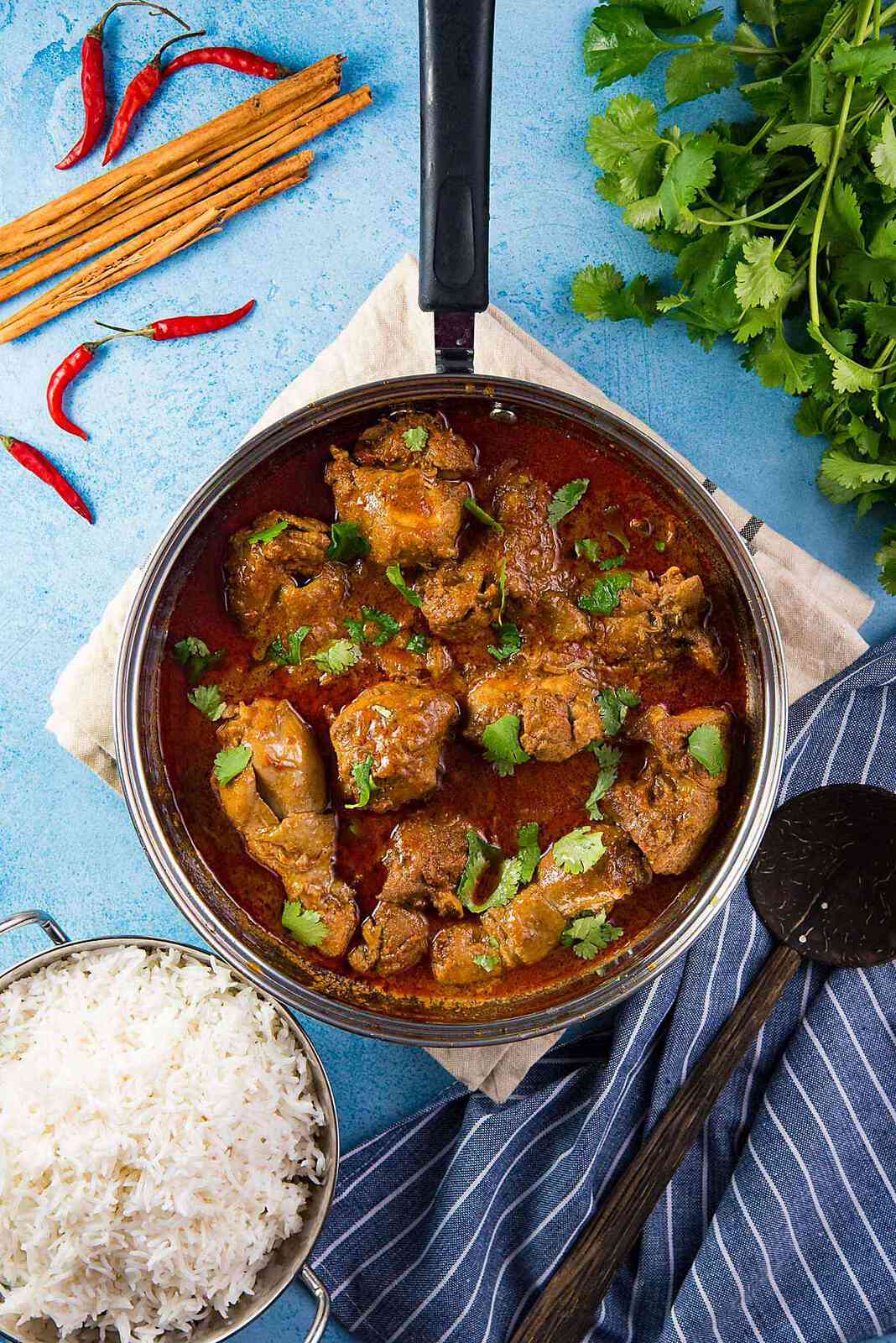
Sri Lankan Chicken Curry (Kukul Mas)
Coconut-rich, deeply spiced chicken curry the way it's cooked at home in Colombo. Forty-five minutes, one pan, served over rice.
Method
- 1
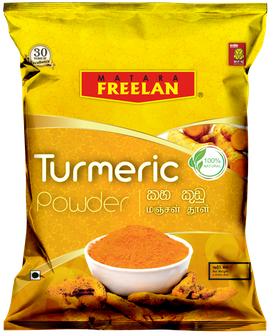
Pat the chicken pieces dry with kitchen paper. Toss with 1 tsp salt, 1/2 tsp turmeric, and 1 tbsp curry powder. Set aside while you prep the rest — 15 minutes is plenty.
- 2
Heat the coconut oil in a heavy-based pan over medium heat. Add the cinnamon, cardamom and cloves. Wait 20 seconds for the kitchen to smell like Christmas, then add the curry leaves and rampe.
- 3
Add the sliced onions and cook for 8 minutes, stirring often, until they're soft and the edges are golden. Don't rush this step — under-browned onions give you a pale, flat curry.
- 4
Stir in the garlic and ginger and cook for 1 more minute.
- 5
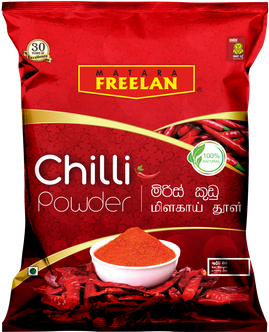
Add the remaining curry powder, meat curry powder, remaining turmeric, and chilli powder. Stir for 30 seconds — the spices need to bloom in the oil to wake up properly.
- 6
Stir in the tomato paste. Add the chicken and turn every piece in the spiced base so it's coated.
- 7
Pour in the water and add the goraka. Bring to a simmer, cover, and cook for 15 minutes. The chicken releases its juices and the gravy starts to thicken.
- 8
Uncover, stir in the thick coconut milk, and reduce the heat to low. Simmer gently — DO NOT BOIL — for 12-15 minutes until the chicken is tender and the gravy has the consistency of double cream.
- 9
Taste. Salt as needed. If it's too sharp from the goraka, add a pinch of palm sugar. If it needs more depth, add another small pinch of curry powder.
- 10
Rest off the heat for 10 minutes before serving. Like all Sri Lankan curries, the second taste is always better than the first.
Why this curry works
Sri Lankan chicken curry — kukul mas — is the dish every Sri Lankan home cook has their own version of. Some are dark and roasted; some are mild and creamy; some lean heavily on goraka, others on tamarind. What they all share is the layered spice base built in a single pan, the bone-in thigh meat that releases its own gravy, and the coconut milk that ties everything together at the end.
This recipe is the Colombo-suburb version — the one that gets cooked on a Wednesday night because it's fast and reliable, served over basmati or red rice with a dhal on the side. Forty-five minutes, one pan, four happy people.
Bone-in thighs, not breasts
Sri Lankan curry needs collagen. Bone-in, skin-on thighs (or drumsticks) give you depth that breast meat just can't — the bones release flavour into the gravy as it simmers, and the dark meat stays tender even after thirty minutes on the heat. Breast meat in a Sri Lankan curry ends up rubbery and tasteless. Don't compromise here.
The two curry powders explained
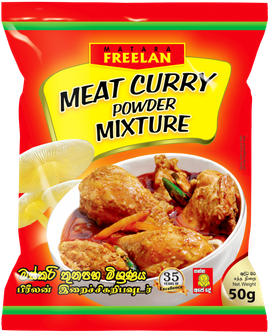
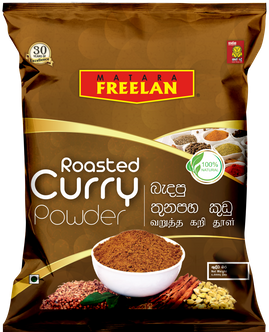
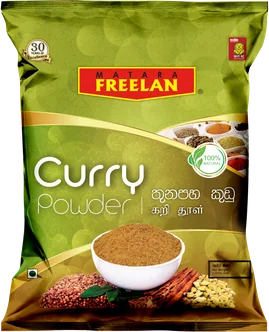
You'll see Ceylo sells both "Curry Powder" and "Meat Curry Powder" — and this recipe uses both. They're different blends:
- Curry Powder is the general-purpose Sri Lankan blend — coriander, cumin, fennel, turmeric, with light roasting. It builds the base aromatic.
- Meat Curry Powder is darker, more deeply roasted, with extra fenugreek and black pepper. It's what gives meat curries their characteristic richness.
Use both for the best result. If you only have one, the base Curry Powder works on its own — just use 2.5 tbsp instead of the split.
Goraka or tamarind?
Goraka (Garcinia cambogia) is the smoky-sour dried fruit Sri Lankan kitchens use to add sharpness. It's punchier and more complex than tamarind — slightly fruity, slightly smoky, deeply savoury. Two soaked pieces in this recipe transform the gravy. If you can't get goraka, tamarind paste works (use a teaspoon dissolved in a tablespoon of water). The dish is still recognisably Sri Lankan; just slightly different in character.
How to serve
Sri Lankan chicken curry expects company on the plate. A typical Sunday lunch would be:
- White basmati or red Sri Lankan rice (rathu kekulu)
- Chicken curry as the main protein
- A dhal curry (parippu)
- A vegetable curry — pumpkin, green beans, or okra
- A green salad or mallum (raw greens with grated coconut)
- Maldive fish chips pol sambol for the chilli hit
- Papadum
It also makes a brilliant filling for godhamba roti wraps — shred the chicken, mix with some of the gravy, wrap in a hot roti with a slice of cheese and a spoon of sambol.
Tips for the best result
- Bloom the dry spices in oil. Adding curry powder to liquid first loses 50% of its aroma. Always cook it briefly in the fat with the onions.
- Low heat after coconut milk. Boiled coconut milk splits and turns your gravy into greasy soup. Keep the heat low after step 7.
- Rest the curry. Five minutes off the heat lets the flavours marry. Twenty minutes is better. Overnight is best.
- Salt at the end. The curry powder already has some salt. Taste before adding more.
Variations
- Black chicken curry. Toast the curry powder in a dry pan for 30 seconds before adding to deepen the colour and smokiness. Add a tablespoon of dark soy at step 5.
- Mild for kids. Skip the chilli powder, halve the spices, and use full-fat coconut milk for a creamy, kid-friendly version that still tastes properly Sri Lankan.
- Jaffna-style. Swap the curry powder for roasted Jaffna curry powder and add a tablespoon of grated coconut at step 5. Darker, drier, more intense.
Storage and reheating
Three days refrigerated in an airtight container. Three months in the freezer. Like every Sri Lankan curry, it tastes better the next day. Reheat slowly over low heat with a splash of water; the microwave will split the coconut milk.
Frequently asked questions
Can I make this in advance? Absolutely — better that way. Make it the day before and refrigerate. The flavours deepen and the gravy thickens to the perfect consistency.
Boneless chicken? You can use boneless thighs in a pinch, but reduce the cook time at step 7 to 10 minutes and add the coconut milk earlier. Don't use breasts.
Where can I buy proper Sri Lankan curry powder in the UK? Ceylo ships our Curry Powder and Meat Curry Powder across the UK with Royal Mail Tracked 48 delivery. Both are roasted in small batches to Colombo-style spice profiles.
Get the ingredients
Everything you need to make this recipe, in one shop.